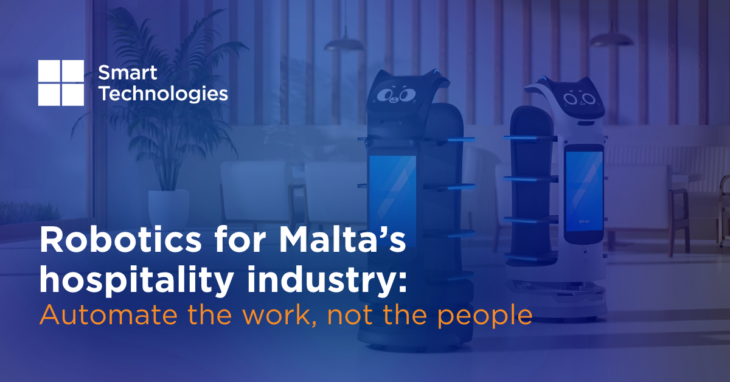
Robotics for Maltas hospitality industry automate the work not the people
Robot waiters have been in the news in Malta recently, and the debate is a healthy one. But we think it is also a little too narrow. The real opportunity is not about swapping a person for a machine. It is about taking the repetitive work off your team so they can do the part of the job that only people can do.
Read More
How to Spot a Phishing Attack: What Businesses Need to Know
Phishing is not a distant threat. It is the most common way cybercriminals gain access to business systems, and it does not require sophisticated hacking skills to pull off. All it takes is one employee clicking the wrong link.
Read More
The Hidden Cost of Flying Blind: What Your Business Data Is Really Costing You
Running a business without clean, connected data costs more than most owners realise. The hidden costs fall into three categories: time lost to manual reporting, decisions made on inaccurate or conflicting figures, and missed opportunities caused by delayed visibility.
Read More
How Opera, Simphony and NetSuite Financials Work Together to Transform Hospitality Finance
Hospitality businesses generate large volumes of financial data across multiple systems, yet finance teams are often left to manually bring that data together. This creates delays, increases complexity, and limits visibility.
Read More
What Happens After the Click Matters Most
Most businesses focus heavily on preventing phishing emails and malicious links from reaching users. While prevention remains critical, many organisations underestimate what happens after a successful click.
Read More
Most Cyber Attacks Still Start with Email
Email remains the most common entry point for cyber attacks, despite major advances in cyber security technology. Modern phishing attacks are designed to look legitimate, making them increasingly difficult for employees and traditional email filters to identify.
Read More
The Malta SME Guide to NIS2 Compliance: Why a Local SOC Matters
NIS2 is raising cyber security expectations across the EU, including for many Maltese businesses operating in sectors such as financial services, iGaming, hospitality, professional services, logistics, healthcare, and critical supply chains. Organisations are now expected to demonstrate stronger cyber resilience, faster incident response, improved risk management, and clearer accountability around security operations.
Read More
What a Wi-Fi Site Survey Actually Reveals (And Why Guesswork Fails)
A reliable Wi-Fi network is rarely the result of simply installing good hardware. In many environments, connectivity issues persist not because of the equipment itself, but because the network has not been designed around how the space is actually used
Read More
Better decisions start with better data: here is what most businesses get wrong
Better decisions start with better data: here is what most businesses get wrong
Read More
Having Backups Is Not the Same as Being Able to Recover
Many businesses assume they are protected because their backup system reports success. In reality, backup success is measured by recovery time, testing frequency and alignment to business continuity expectations. Without structured testing and documented recovery procedures, backups provide false confidence. True resilience comes from verification, not assumption.
Read More
Why a SOC Is Critical to Cyber Resilience
Cyber resilience is not about preventing every attack. It is about how quickly your organisation can detect, respond to, and recover from threats., or SOC, provides continuous monitoring, early detection, and structured incident response. With clear processes and 24 7 oversight, a SOC reduces disruption, limits financial impact, and strengthens business continuity.
Read More
Case Study: Flexibility And Resilience For High-Volume Hospitality
Café del Mar Malta is known for delivering exceptional service in a vibrant, high-volume environment. As one of the island’s most iconic F&B venues, it regularly caters to thousands of guests during large-scale events and daily operations, supported by 48 point-of-sale terminals across two distinct locations.
Read More